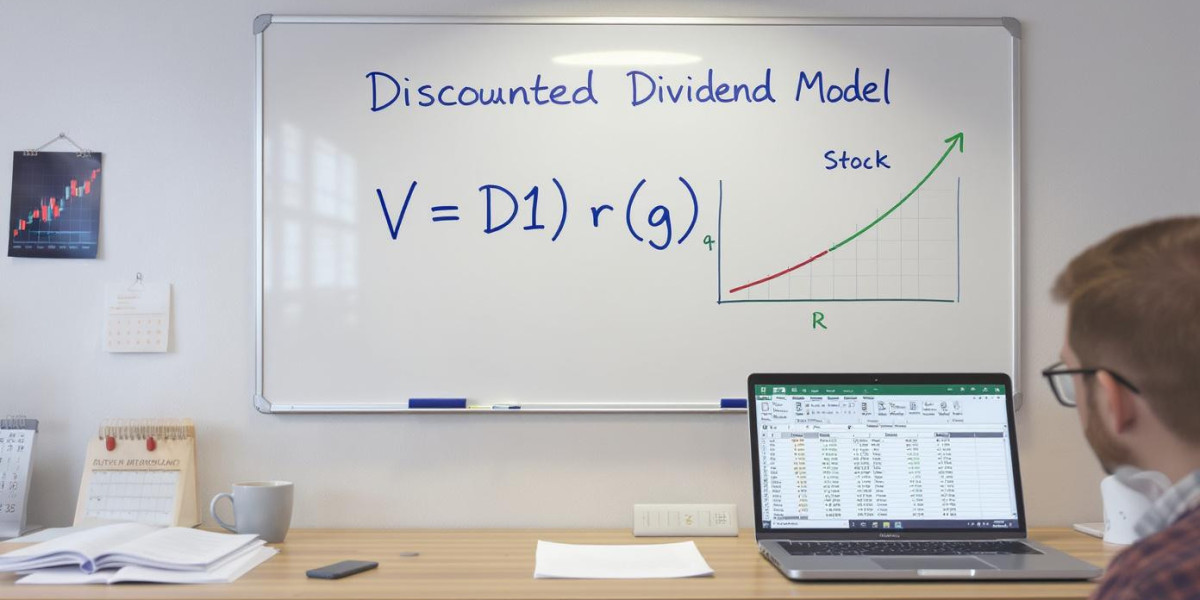

Long-term investors often look for tools that help them make well-informed, sustainable investment decisions. One such tool is the Discounted Dividend Model, which provides a structured method to assess a stock’s intrinsic value based on expected dividends. By focusing on cash flows rather than short-term market movements, this model aligns perfectly with long-term investment strategies.
Why Long-Term Investors Prefer the Discounted Dividend Model
The Discounted Dividend Model (DDM) emphasizes future dividends, offering a realistic snapshot of a stock’s potential. For long-term investors, this model:
- Highlights consistent income streams
- Encourages patience and strategic thinking
- Helps avoid impulsive decisions driven by market volatility
Using this model, investors can identify stocks with solid fundamentals and sustainable growth potential.
Understanding the Core Formula
The basic DDM formula for constant dividend growth is:
P0=D1r−gP_0 = \frac{D_1}{r - g}
Where:
- P0P_0 = Present stock value
- D1D_1 = Next year’s projected dividend
- rr = Required rate of return
- gg = Dividend growth rate
By discounting expected dividends to present value, this formula gives investors a benchmark to compare against market prices.
Choosing the Right Model for Your Portfolio
Different companies may require different DDM approaches:
- Gordon Growth Model: Best for companies with steady, predictable dividends.
- Two-Stage Model: Suitable for firms with high initial growth transitioning to stable payouts.
- Multi-Stage Model: Ideal for companies with variable growth patterns or multiple phases.
Selecting the right method ensures valuations accurately reflect the company’s dividend profile.
Estimating Future Dividends Accurately
To make the model effective, long-term investors need realistic dividend projections. Analysts consider:
- Past dividend trends
- Earnings growth
- Payout ratios
Reliable projections provide confidence that the calculated intrinsic value represents the stock’s true long-term worth.
Determining the Right Discount Rate
The discount rate reflects the risk-adjusted expected return. Choosing an appropriate rate is crucial because it influences the present value of dividends. Methods like the Capital Asset Pricing Model (CAPM) or the company’s cost of equity are commonly used to determine a precise rate.
Advantages for Long-Term Investors
- Focuses on cash flow and shareholder returns
- Encourages disciplined, patient investing
- Offers a transparent, formula-driven approach
- Reduces dependence on short-term market fluctuations
Important Information
For long-term investors, the Discounted Dividend Model serves as a strategic tool to evaluate dividend-paying stocks. Regular updates to dividend projections and discount rates, along with monitoring market trends, are essential for maintaining accuracy. Using DDM in conjunction with other valuation techniques strengthens portfolio decisions and supports sustainable investment growth.
At BusinessInfoPro, we empower entrepreneurs, small businesses, and professionals with actionable insights, strategies, and tools to fuel growth. By simplifying complex ideas in business, marketing, and operations, we help you turn challenges into opportunities and navigate today’s dynamic market with confidence. Your success is our mission because when you grow, we grow.